Episode 6: Valentine, NE
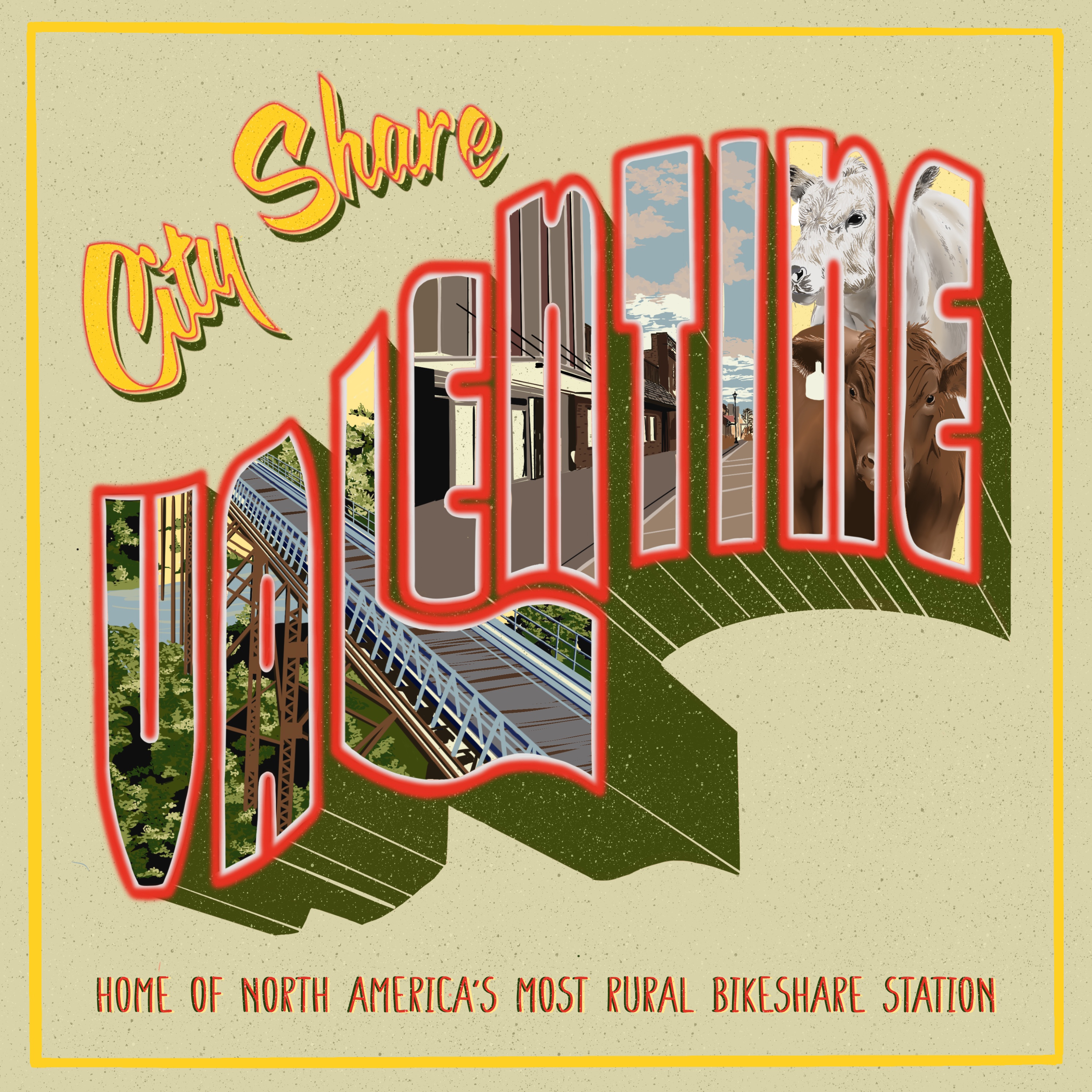
City Share goes to Valentine, home of North America’s most rural bikeshare station. While we’re there, we ride to one of the quietest places on the planet along one of the longest rail trails in the US.
Listen to City Share wherever you get your podcasts.



Benny:
Are they okay, you think? Because it will get loud that way with cows. Cow noise.
Sam:
Oh, you’re not you’re joking you were. I thought you were joking. No, you’re serious that the cows will get loud.
Benny:
The cows? Oh, you can hear them right now, right?
Sam:
Those are cows. You can tell them not from around here.
Sam:
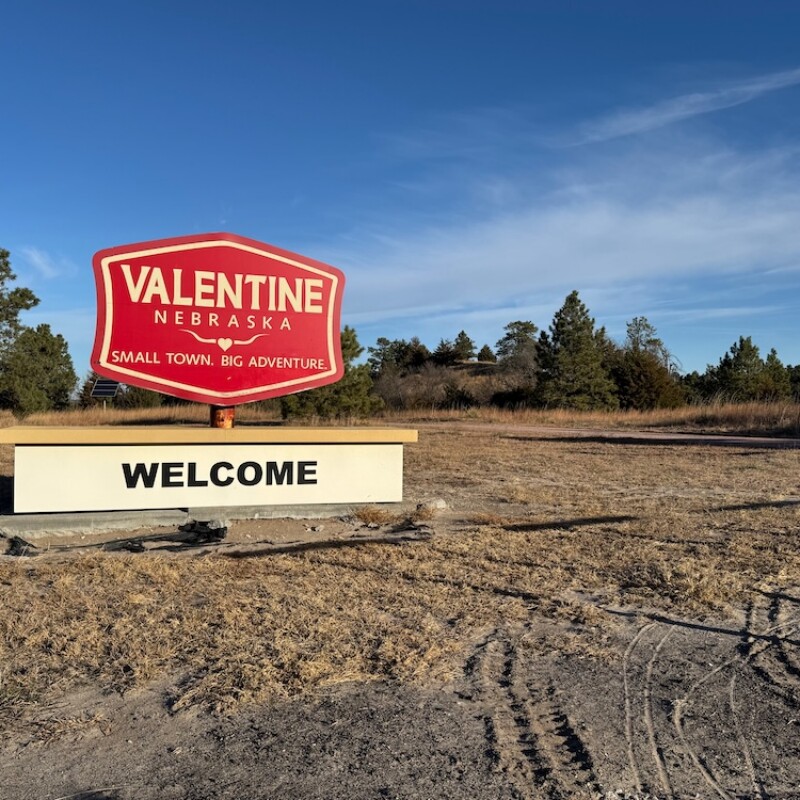
This is City Share, a show about how we move through cities and how cities move us. I’m Sam Her. Today we’re not going to a city at all. We’re going to the small town of Valentine, Nebraska. It’s in what you could say is the middle of nowhere. It’s about two hours from the closest Walmart, five from Omaha, around 2,600 people live here. Valentine is home to one of the quietest places on the planet, one of the longest rail trails in the US, and the most rural bike share station in North America.
Teena:
We love going down the river. I love all the canyons and stuff. It’s just a gorgeous place to live. Everybody thinks Nebraska’s flat, but it’s not true.
Kyle:
The places you go have fun are are just the natural places.
Emma:
All the hunting and fishing and outdoor recreation type of stuff that you can imagine. I mean, right out your back door.
Kyle:
Like you go down to the creeks and hang out for a day, or you go to the local fishing ponds and you fish, and you go to the Niobrara River.
Duane:
Yeah, I think I think it’s magical to get in a quiet craft and get on the river in the quiet of the week in the morning and float that river.
Benny:
The clouds out here are always so crystal clear and reflective.
Duane:
It’s incredibly peaceful.
Regina:
We’re pretty fantastic out here in the Sandhills.
Sam:
Valentine is in the middle of an area called the Sandhills. Which I thought was just a nickname because when I got to Valentine, there were beautiful rolling grasslands all around us. But underneath all of that grass is sand, tons and tons of sand, that blew off the Rocky Mountains starting about two million years ago because of moving glaciers. These are actually the largest sand dunes in the Western Hemisphere. And cutting through the Sandhills is a big river, the Niobrara River. Niobrara. Shallow, green, or sometimes brown, depending on the time of year, and very very quiet. Actually, it’s the first designated Quiet Trail in the United States.
Sam:
Can you say what a Quiet Trail designation is?
Regina:
So a Quiet Trail is free of man-made noise.
Sam:
This is Regina, Cherry County Tourism Director.
Regina:
It would have been in 21 or 22, they came with all of their sound equipment and they floated the river for three days, I want to say.
Sam:
A few years ago, a team from Quiet Parks International came out to measure the quietness of the river.
Regina:
The equipment that they brought could hear any kind of noise…but they also measured nature sounds and some of those things. But they said it was some of the quietest in the world.
Sam:
So you’ve got sand dunes, grasslands, and a very quiet river. This is the stageset for Valentine.
Sam:
While the Sandhills are tough for growing food, it turns out, they are great for grazing cattle. The Sandhills have been supporting cattle herds since the late 1800s.
Regina:
Well we have more cattle here than people. I don’t know if you’ve heard that before. And you can fit the state of Connecticut inside Cherry County.
Sam:
Cherry County, the county that Valentine is in, produces more cattle than any other county in the United States.
Kyle:
I mean, we grew up being out on ranches and branding and haying in the summer.
Sam:
That’s Kyle, the mayor. He has a ranch. It’s like almost everyone in Valentine has some connection to ranching. The owner of the bookstore, also has a ranch. Or the barista at the coffee shop, she used to do embryo transfers for cows. Valentine is a true ranch town.
Sam:
So we’re gonna the sale ring?
Regina:
Going to the sale ring… and gonna get married…
Sam:
Home to the very popular Valentine Livestock Sale Barn Ring. Cattle auctions happen pretty much every Thursday.
Regina:
They’ve had some record sales lately. Cattle prices are really good right now.
Sam:
In fact, cattle prices have been up over the past six years. They just reached a record high, which means good cash flow for Valentine. And when people come from all around the area to buy and sell cattle, they also buy other stuff.
Duane:
You have one of everything that you need here. You know, a farm store, feed store, a hardware store, grocery stores and towns who are closer to the population centers, for instance, north Platte, all of those services begin transferring to the city… So we, we are just kind of in that sweet spot here where we draw from about 60 or 70 miles.
Sam:
It’s like a watershed, and if you’re in Valentine’s watershed, you’re going to end up there. Like, A lot of people come down from the Rosebud Reservation just north in South Dakota to shop and have a night in town.
Benny:
Good local place that sells local art
Sam:
Oh this place says coffee
Benny:
And then the bookstore is just a few down
Sam:
We’re walking down Main St. It’s a few blocks long. We can see all the way from one end to the other.
Sam:
This is really cute.
Sam:
Semis are rolling through, but there’s also wide sidewalks, and storefronts lined up one right after the other. Over the past few years, Valentine’s been changing. Empty storefronts in town are becoming new restaurants, coffee shops, and gift stores. During the pandemic, Valentine, with all of its outdoor attractions and space, was a perfect place for people to get away from other people. And it just so happened that Valentine had been gearing up for a tourism campaign around that same time.
Regina:
So we said we were halfway from anywhere and in the middle of nowhere. Perfect.
Sam:
Valentine’s been doing a lot to attract tourists over the past several years. Something like 75,000 people come to float the Niobrara River every year. Besides highlighting their natural wonders, they built a fancy new golf course and they host a marathon each year that people from all over the country come to run. And in 2022, they completed a Main Street redesign project that widened the sidewalks and added art to make it a real destination. This is where bikeshare comes in. As part of this Main Street redesign, they had kind of a crazy idea, to put a bikeshare in the middle of nowhere Valentine where you can walk from one side of town to the other in 15 minutes flat.
Benny:
I’m from a small town in Nebraska, um, smaller than Valentine even. And I had always thought I would put a bikeshare station there just to test the waters of what a rural bikeshare station would be. Because at that time, that was like 2018, 2019, there wasn’t a rural bikeshare station that I knew of anywhere, not even close.
Sam:
Benny runs the bike share program in Omaha, Nebraska’s largest city. There are a few other rural bikeshare programs now, like one in Kansas that started in 2019, and a few others that you’ll see around North America. But there’s a reason you usually see bikeshares in big cities. You need to have enough people who are going to ride it, you need access to maintain it. And you’re usually picking up a bike in one spot and dropping it off in another. So it hadn’t really been tried in such a remote place before. But Kyle the Mayor said, What the hell? Why not?
Kyle:
So I tend to oversimplify things, and I looked at it and said, hey, uh, that doesn’t look that complicated to do. Why don’t we just talk to those guys and have them do one?
Benny:
And so he reached out and called. So we we talked about it and we were we were all in right from the start. We’re like, this is perfect. So my hometown was off the table, and we were gonna do Valentine.
Sam:
There were details to figure out, like who’s gonna fix the bikes in a town with no bike shop?
Benny:
We don’t have boots on the ground here. There’s no bike shop. Um, it’s a five and a half hour drive one way from our shop. And so, you know, what what was the play on for when something happened?
Sam:
Some of the solutions they worked out were a little unconventional.
Benny:
And if the station went down, we FaceTime with the mayor and he has keys to the kiosk, and we just walk him through what plug to unplug and then plug back in to do a hard reset.
Sam:
Regina and her colleague check and charge the batteries every week.
Sam:
Please tell me all about it.
Regina:
So I have a very beautiful little basket that I carry the batteries in, but we do drive over there and they’re a little cumbersome. You know, it’s it’s quite a weight to bear. Just kidding, Benny. Benny’s laughing at me.
Benny:
I I would like to add I she’s being a little humble on this because this it’s such an important part of what bike share is. Like this is really a community effort to make this successful.
Sam:
But an even bigger question was looming over this entire project. Is anyone actually going to use it?
Sam:
Uh, did you know that Valentine had a bike share?
Emma:
Um, I did, yeah. I I honestly wondered who used it. But I did think it was cool.
Duane:
Well, I think it’s a wonderful idea.
Sam:
You’ve never tried it.
Duane:
No, I have not.
Sam:
Wow, a little frosty on the seat there. Okay. Um, alright, I’ll unlock.
Sam:
On a chilly November day, me and Benny, Logan, and Paul, the guys that run the bikeshare program, decided to take a sunrise bike ride together. We headed outside the Comfort Inn on Main Street to the station right there and checked out some e-bikes.
Benny:
Do use Map My Ride or or or anything for directions?
Sam:
I don’t
Benny:
So it’s just straight that way. And then turn around. And that’s it.
Sam:
The Cowboy Trail is a 317-mile-long rail trail, one of the longest rail trails in the U.S. Much of it is packed limestone gravel, nice for biking and walking on. And there are no cars.
Benny:
We have clear skies, the sun is just coming up. This is this is what I love.
Sam:
We’re headed about two miles east along the Cowboy Trail to a historic railroad bridge. It’s not accessible by car, so you have to bike or walk the distance.
Benny:
You know, there is some method behind this world’s most rural bikeshare station, and that is to get to this bridge that you’re about to go over.
Sam:
The bridge, which goes by many names, the Valentine Bridge or the Cowboy Trail Bridge, or just The Bridge, is super high up, 148 feet. It’s a long wooden path supported by giant metal legs. But when you’re on the bridge, you just see wood planks stretching out for a quarter mile. It’s like a walkway in the sky. It does have railings.
Sam:
The structure of this bridge is pretty uh impressive.
Benny:
I forget what year it was built, but I’m always like, how did they do that back then? I don’t even know how they do it now.
Sam:
It was originally built in the early 1900s for trains to pass through, but now it’s been converted for walking and biking. And it offers one of the most gorgeous views in all of Nebraska.
Sam:
What are we looking at right now?
Benny:
So that’s the Niobrara River…The birds are loud right now. I’ve never seen them come off the water like that before.
Sam:
Down below, the river is sparkling. There are really steep riverbanks with bushes and trees. You can see how the river carved through the Sandhills, which right now are dotted with hay bales.
Benny:
A lot of this is just ranch land that you see. See cattle grazing.
Sam:
We can see for miles in every direction.
Sam:
All right, I gotta say, Nebraska is very beautiful.
Benny:
It is, isn’t it?
Sam:
This is what bikeshare in Valentine is all about. So far, thousands of rides have been taken by people visiting who want to see this bridge. Usually, you’d have to hike miles into the wilderness to find such a remote spot. But in Valentine, it’s a short bike ride away.
Benny:
Trip returned.
Sam:
Nice.
Sam:
Beautiful day, another beautiful day.
Logan:
Another beautiful day in Valentine, Nebraska.
Sam:
City Share is brought to you by the North American Bikeshare & Scootershare Association and is supported by the Better Bike Share Partnership. Huge, huge thanks to them for all of their support. Another big thanks to Sun Tiki Studios in Portland, Maine, who donated the studio space and time for us to record this podcast. They are awesome. Special thanks to Nick McMahan and Quiet Parks International for the sounds of the Niobrara River recordings used in this episode. City Share is reported and produced by me, Sam Herr. I’m also the executive producer for the show. Our other producer and fact checker is Ariel Knoebel. Our editor is Peter Lang-Stanton. He also mixed the show. Our show art is by Ariel Knoebel. Music is by Blue Dot Sessions. Sound effects are from Freesound.org. Additional sound effects are by mBoscolo. And once again, I’m your host, Sam Herr. Thanks for listening.
Benny:
I think so far my favorite my favorite part of this trip with you has been when you got so excited when you saw the cows, took the pictures, we were like, alright, and you put the gloves back on, your phone away. We rolled maybe four feet and you go, hay bales! I gotta get a picture of those! Got out of the bike, took your gloves off, got your phone out.